
Conflicting laws threaten biodiversity and food security
07/21/2026Europe is hindering its own efforts to protect bees, butterflies and other pollinators. Researchers warn of serious consequences for biodiversity and food security.
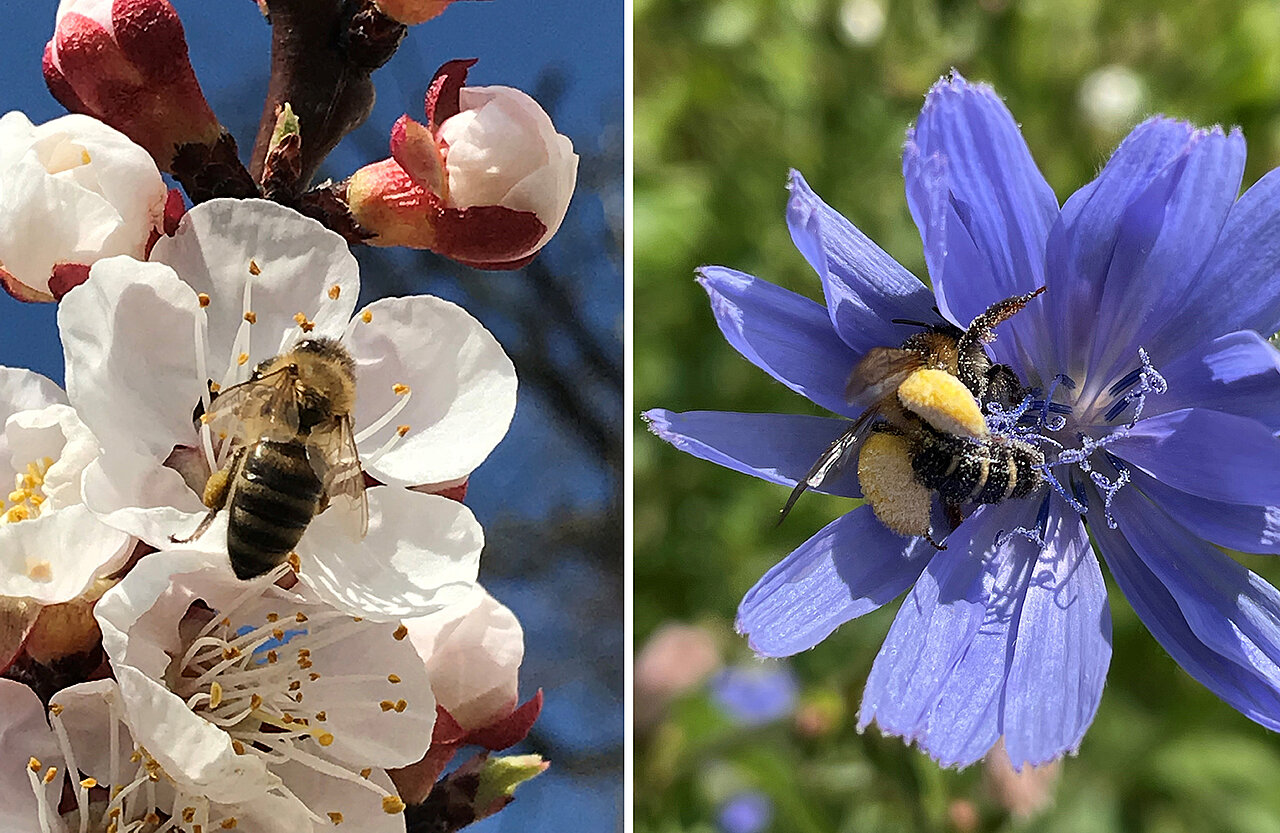
A strategy paper by eight major European research consortia identifies risks to species conservation, ecosystem functions and food security in the EU and beyond – should the Union fail to halt the decline in wild pollinators and promote pollinator management.
A key obstacle to the effective protection of pollinators is said to be conflicting policy frameworks: the Common Agricultural Policy and the Biodiversity Strategy to 2030.
The report has been produced by a team of 135 leading researchers from fields including ecology, economics, political science and environmental law. The authors include Professor Ingolf Steffan-Dewenter and Jie Zhang from the Chair of Zoology III (Animal Ecology and Tropical Biology) at the Biocentre of the University of Würzburg.
The strategy paper has been published in the journal Advances in Pollinator Research. It shows that although the EU has officially declared insect protection to be a goal, it does not pursue a consistent approach. Whilst some regulations call for the conservation of nature, others promote intensive agriculture and the use of pesticides.
Why pollinators are vital for human survival
The protection of insects is more than just a concern for environmentalists. It is a matter of economic and health security: if pollinators disappear, the food supply is put at risk.
The figures from researchers are clear: 80 to 90 per cent of all wild plants and 75 per cent of the most important crops rely on insects for pollination. Without them, there would be hardly any fruit, vegetables or nuts. Even today, three to five per cent of food crops are missing worldwide because there are no longer enough pollinators in many regions.
The loss of insects would also have serious financial consequences. A lack of pollination would cost Europe an estimated 24 billion euros annually.
“We must realise that protecting insects is a necessary investment in our own future,” says Ingolf Steffan-Dewenter. “This is about preserving the fundamental prerequisites for a stable society, a healthy diet and intact ecosystems. We cannot afford to do nothing.”
Insects face death by a thousand cuts
The authors of the strategy paper call for the gap between scientific knowledge and political action to be bridged. They identify several factors that are simultaneously taking their toll on insects:
• intensive land use and soil sealing (which reduces habitat),
• the use of pesticides (plant protection products), the release of microplastics and other substances into the environment,
• excessive nitrogen in the environment (over-fertilisation reduces biodiversity),
• and climate change, as well as heatwaves and droughts.
Experts refer to this as “death by a thousand cuts”, as many different pressures combine to pose a lethal threat.
They also see a problem in the “blind spot” in policy: legislation often focuses on bees and butterflies. However, the regulations often overlook the fact that moths, beetles, flies and – in the EU’s overseas territories – even bats also play a vital role in pollination.
Solutions and outlook: What needs to change
Research findings from JMU and other institutions make it clear that a systemic change is necessary. Policy must continue to evolve towards recognising biodiversity as an integral part of social, economic and ecological resilience.
The strategy paper sets out 15 recommendations across three key areas to reverse the decline in pollinators:
1. Consistent legislation: Policy objectives must be coordinated. It is unacceptable to plan measures to protect insects whilst at the same time promoting the use of harmful chemicals through subsidies.
2. Strengthening education: In professions related to agriculture, landscape planning and urban development, knowledge of insects’ needs must be better embedded.
3. Local collaboration: Agriculture, beekeeping and nature conservation organisations must be involved in the planning of conservation measures from the outset to ensure they work in practice.
About the authors
The authors of the strategy paper represent eight major research consortia funded by the EU: Butterfly, VALOR, PollinERA, WildPosh, AGRI4POL, ProPollSoil, RestPoll and Safeguard. They all focus on pollination-related topics.
Ingolf Steffan-Dewenter coordinates the Safeguard consortium. This consortium investigates the causes of pollinator decline and its ecological, economic and societal impacts. The consortium partners develop management and policy guidelines for the protection of wild pollinators.
Publication
Towards pollinator stewardship in all policies: Policy incoherence in the EU is a major barrier to pollinator restoration. Advances in Pollinator Research, 16 June 2026 (preprint), DOI: 10.5281/zenodo.20715670, Open Access https://zenodo.org/records/20715670