


Deutsch
FACULTY OF BIOLOGY

News/Archive

News

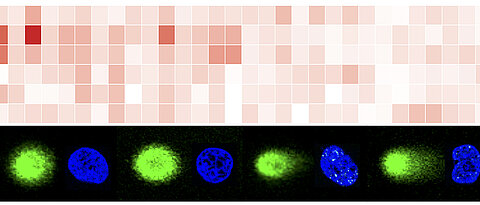
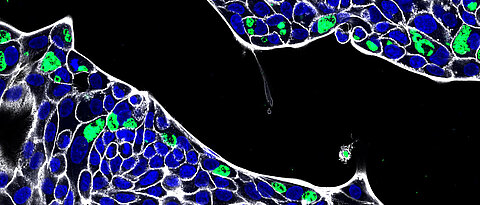
NEAT1 is genome-protective in human U2OS cells. Accumulation of NEAT1 at DNA double-strand breaks (NGS data, top) and defects in DNA damage signaling in NEAT1-deficient cells (merged confocal imaging data, bottom).

Genome instability can cause numerous diseases. Cells have effective DNA repair mechanisms at their disposal. A research team at the University of Würzburg has now gained new insights into the DNA damage response.

more
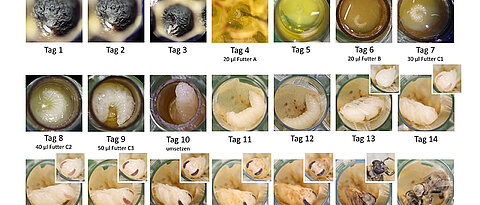
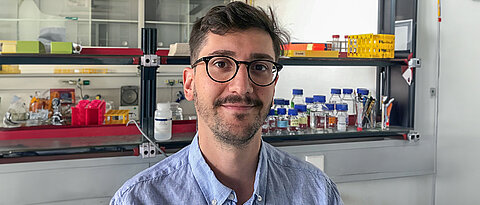
The current cover photo of “Aging Cell” - here is an excerpt - refers to the Würzburg study.

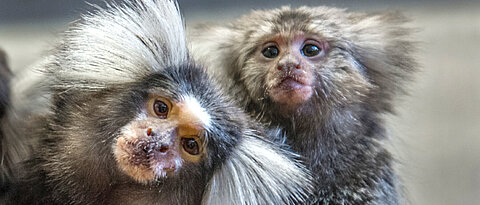
Numerous studies have shown that the older the father, the higher the risk of disease for the offspring. Human geneticists at the University of Würzburg have now taken a closer look at the processes responsible for this.

more
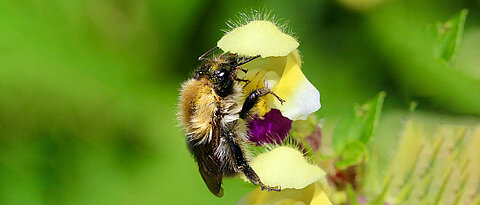
 The common carder bee (Bombus pascuorum) feeding on the large-flowered hemp-nettle (Galeopsis speciosa) in the Austrian Alps. If it gets too hot, the insects can hardly detect the scents of the flowers.

It's not just us humans who suffer from heatwaves. Researchers at the University of Würzburg discovered that hot temperatures rob bumblebees of their sense of smell – and makes them struggle when searching for food.

more
none

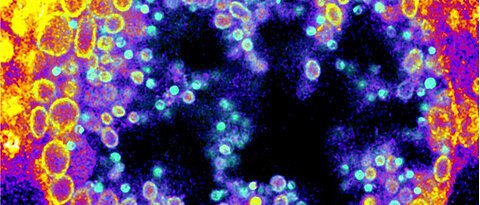
Chlamydiae are sexually transmitted pathogens that can apparently survive in the human gut for a long time. Researchers from Würzburg and Berlin report this in the journal PLOS Pathogens.

more
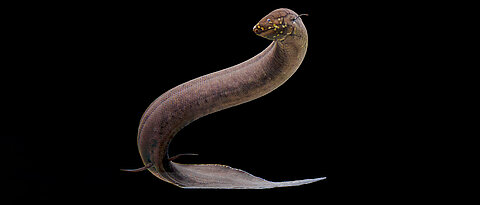
No other animal in the world has a genome as large as the South American lungfish (Lepidosiren paradoxa).

An international research team has sequenced the largest genomes of all animals – those of lungfish. The data will help to find out how the ancestors of land vertebrates managed to conquer the mainland.

more
none

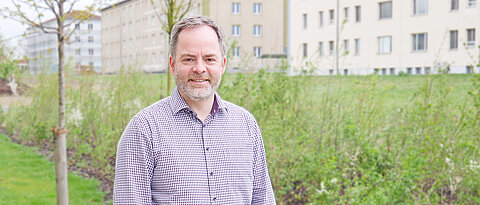
Christian Hof is head of the new Chair of Global Change Ecology at the University of Würzburg. His research focuses on how climate change and human activities affect species and biodiversity.

more

Events

PHD defense Rose Sagwe; Faculty for Biology

"Pollinator diversity, pollination deficits, and pollination efficiency in avocado (Persea americana) production across different landscapes in Murang's county, Kenya"

03/15/2022, 2:00 PM - 3:00 PM
[Translate to Englisch:] Logo Biozentrum der Universität Würzburg
Category: Fakultät für Biologie, Kalender-JMU, colloquium, oral doctoral examination
Organizer: Fakultät für Biologie, via Zoom
Speaker: Rose Sagwe, M.Sc.

PHD defense Jinping Lu; Faculty for Biology

"The vacuolar TPC1 channel and its luminal calcium sensing site in the luminal pore entrance"

02/16/2022, 10:00 AM - 11:00 AM
[Translate to Englisch:] Logo Biozentrum der Universität Würzburg
Category: Fakultät für Biologie, Kalender-JMU, colloquium, oral doctoral examination
Location: Seminarpavillon des Julius-von-Sachs-Instituts
Organizer: Fakultät für Biologie, via Zoom
Speaker: Jinping Lu, M.Sc.

PHD defense Pamela Ferretti; Faculty for Biology

“Clostridioides difficile beyond the disease-centred perspective: Beneficial properties in healthy infants and over-diagnosis in diseased adults identified by species- and SNV-based metagenomic analysis"

12/15/2021, 9:15 AM - 12/10/2021, 1:15 PM
[Translate to Englisch:] Logo Biozentrum der Universität Würzburg
Category: Fakultät für Biologie, Kalender-JMU, colloquium, oral doctoral examination
Location: Hörsaal A102, B1 (Biozentrum), Hubland Süd
Organizer: Fakultät für Biologie, via Zoom
Speaker: Pamela Ferretti, Master in Cellular and Molecular Biotechnology

PHD defense Anna Vyalkova; Faculty for Biology

“Testing efficacy of approved Smallpox Vaccines in Human and Canine Cancer Therapy: Adipose - tissue derived stem cells (ADSC) take up VACV and serve as a protective vehicle for virus delivery to tumors"

12/08/2021, 1:15 PM - 2:15 PM
[Translate to Englisch:] Logo Biozentrum der Universität Würzburg
Category: Fakultät für Biologie, Kalender-JMU, colloquium, oral doctoral examination
Location: Hörsaal A102, B1 (Biozentrum), Hubland Süd
Organizer: Fakultät für Biologie, via Zoom
Speaker: Anna Vyalkova, Dipl. Biol.